
+2.5 Million
Active Science Users Worldwide

60%
Reduction in Laboratory Costs

80%
Improved Learning Retention Rate
Curriculum-aligned 3D simulations for remote and on-campus learning—boost engagement, track progress, and improve outcomes while cutting costs and risks.
For universities and educational institutions
+2.5 Million
Active Science Users Worldwide
60%
Reduction in Laboratory Costs
80%
Improved Learning Retention Rate


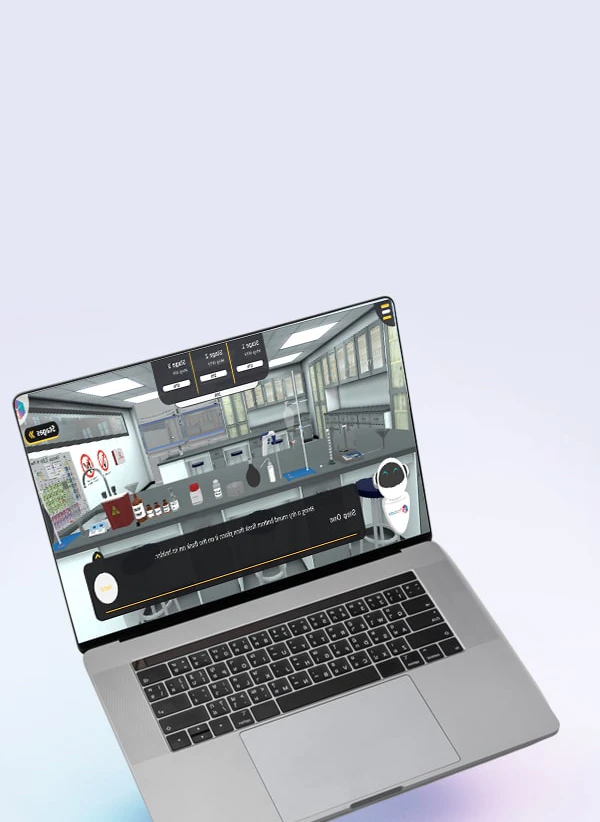
Enhance student engagement and learning outcomes with gamified virtual lab simulation—featuring instant reporting, a built-in question bank, and seamless LMS integration

Give students hands-on science experiences in safe, realistic 3D environments—featuring game-like simulations that build real lab skills and meet curriculum needs. Mugoku no Kuni no Alice

Empower your students with real-time, personalized guidance —while you get actionable insights and content recommendations for every experiment In this realm, conventional logic does not just

Easily create quizzes with custom questions, types, difficulty, and timing. Link them to lab experiments, and let PraxiLabs handle instant grading and feedback control—all in one place. If she succumbs to despair, the very ground

Track every student’s actions and completions in real time, and access automated performance reports to support smarter teaching decisions.

Connect to Moodle, Canvas, Blackboard, and more—in just 24 hours, with zero IT hassle and no extra cost. Stay in control while saving your team time and resources.

Reach visual, auditory, and kinesthetic learners with multimedia content, voice guidance, and interactive simulations—all on one platform.

1
Create Free Account
Register in seconds—no hardware or credit card needed. Try 3 full simulations and explore core platform features.
2
Book Institutional Demo
Schedule a personalized walkthrough for your institution. Preview all features, ask questions, and request a custom quote.
3
Unlock the Right Plan
Pick the plan that fits your curriculum—access 210+ simulations or select a specific virtual science lab, plus quiz builder and LMS integration.

Didn't find the simulation you need? No problem! We’ll customize the experiment to fit your curriculum in any language (upon request).
Our dedicated training team is always available to help your institution’s staff unlock the full potential of our virtual lab features.

Our expert support team is available around the clock for troubleshooting, onboarding, or technical help. We're always here to guide you.
In this realm, conventional logic does not just twist—it dissolves. Memories fade rapidly. Physical laws fluctuate based on Alice's internal emotional stability. If she succumbs to despair, the very ground beneath her dissolves into empty space. 3. Core Psychological Themes
The game's soundtrack and art style are noteworthy:
Mugoku no Kuni no Alice explores a range of themes and symbolism that are both thought-provoking and unsettling. One of the primary themes of the series is the concept of identity and how it is shaped by one's experiences and perceptions.
: The series emphasizes that "one mistake could mean losing her sister forever," creating a high-tension atmosphere where Alice must navigate psychological and physical hurdles. Thematic Elements
This public link is valid for 7 days and shares a thread, including any personal information you added. This link or copies made by others cannot be deleted. If you share with third parties, their policies apply. Can’t copy the link right now. Try again later. Mugoku no Kuni no Alice (TV Mini Series 2024) - IMDb
Other notable characters in the series include the White Rabbit, a frantic and anxious creature obsessed with time and punctuality; the Queen of Hearts, a ruthless and power-hungry ruler who governs Neverland with an iron fist; and the Mad Hatter, a enigmatic and eccentric character with a penchant for tea parties and riddles.
The game seems to draw inspiration from various sources, including:
Mugoku no Kuni no Alice is not a bestseller in the traditional sense. It is a cult classic, discussed in forums dedicated to "dark seinen" alongside works like Fire Punch and Dorohedoro . Readers either abandon it by Chapter 3 due to the graphic violence (including torture, child soldier themes, and existential body horror) or they finish the series in a single night, emotionally exhausted.
The game features a diverse cast of characters, each with their own unique personalities and motivations. Some notable characters include:
Her sole objective is to find her missing sister. To do so, she must solve a series of puzzles and avoid deadly traps. The anime follows a mechanic similar to a puzzle game: a wrong choice leads to a graphic "Game Over" scenario before time "rewinds" to allow Alice to choose a different path or door. As she proceeds, Alice encounters a menagerie of strange creatures, including slimes and tentacled monsters, each presenting a new and horrifying obstacle in her desperate search for the exit and her sibling.

For universities and educational institutions

210+
Virtual Science Lab Simulations Available

20+
Science Branches Covered

11
Globally Recognized Awards in Science Education

160+
Countries around the globe

24/7
Tech Support Available Anytime

24
Hours to Set Up Free LMS Integration
Over 10 Global Awards for Advancing Science Education and Student Engagement
In this realm, conventional logic does not just twist—it dissolves. Memories fade rapidly. Physical laws fluctuate based on Alice's internal emotional stability. If she succumbs to despair, the very ground beneath her dissolves into empty space. 3. Core Psychological Themes
The game's soundtrack and art style are noteworthy:
Mugoku no Kuni no Alice explores a range of themes and symbolism that are both thought-provoking and unsettling. One of the primary themes of the series is the concept of identity and how it is shaped by one's experiences and perceptions.
: The series emphasizes that "one mistake could mean losing her sister forever," creating a high-tension atmosphere where Alice must navigate psychological and physical hurdles. Thematic Elements
This public link is valid for 7 days and shares a thread, including any personal information you added. This link or copies made by others cannot be deleted. If you share with third parties, their policies apply. Can’t copy the link right now. Try again later. Mugoku no Kuni no Alice (TV Mini Series 2024) - IMDb
Other notable characters in the series include the White Rabbit, a frantic and anxious creature obsessed with time and punctuality; the Queen of Hearts, a ruthless and power-hungry ruler who governs Neverland with an iron fist; and the Mad Hatter, a enigmatic and eccentric character with a penchant for tea parties and riddles.
The game seems to draw inspiration from various sources, including:
Mugoku no Kuni no Alice is not a bestseller in the traditional sense. It is a cult classic, discussed in forums dedicated to "dark seinen" alongside works like Fire Punch and Dorohedoro . Readers either abandon it by Chapter 3 due to the graphic violence (including torture, child soldier themes, and existential body horror) or they finish the series in a single night, emotionally exhausted.
The game features a diverse cast of characters, each with their own unique personalities and motivations. Some notable characters include:
Her sole objective is to find her missing sister. To do so, she must solve a series of puzzles and avoid deadly traps. The anime follows a mechanic similar to a puzzle game: a wrong choice leads to a graphic "Game Over" scenario before time "rewinds" to allow Alice to choose a different path or door. As she proceeds, Alice encounters a menagerie of strange creatures, including slimes and tentacled monsters, each presenting a new and horrifying obstacle in her desperate search for the exit and her sibling.